

Order turkey poults online from Chesapeake Farm & Hatchery. Choose heritage breeds or fast-growing Broad Breasted poults for the table, all backed by our 72-hour live arrival guarantee.
Minimum order
4 poults
Mix any turkey breeds to reach it.
Shipping
- $49.95for 4–9 poults
- $24.95for 10 or more
Charged once per order, even when you mix ducklings, goslings, turkey poults, guinea keets and meat chicks.
Ship weeks
Mid-February to late October 2027
Depending on breed. Pick your ship week on each breed's page. Orders for each ship week close the Sunday before at 11:59 PM Eastern.
Shop by ship week
Pick the week you'd like your birds to ship to see every breed available that week. Each breed opens on that week, ready to add to your cart.
Pick a ship week to see the breeds shipping that week.
Ship weeks are coming soon. Browse every breed below.
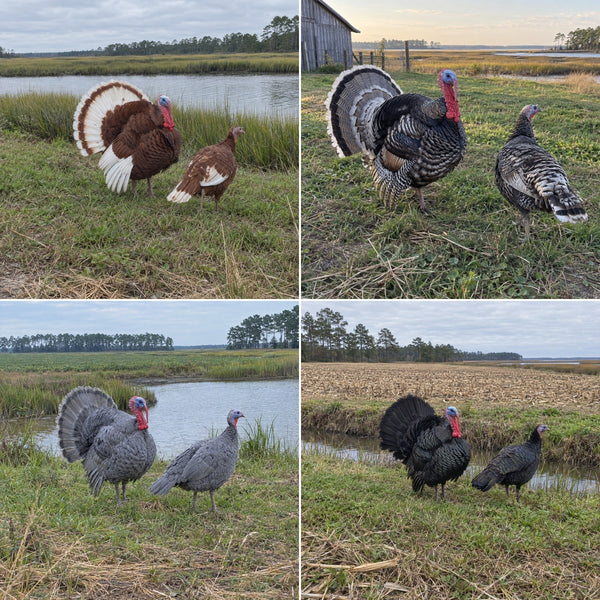
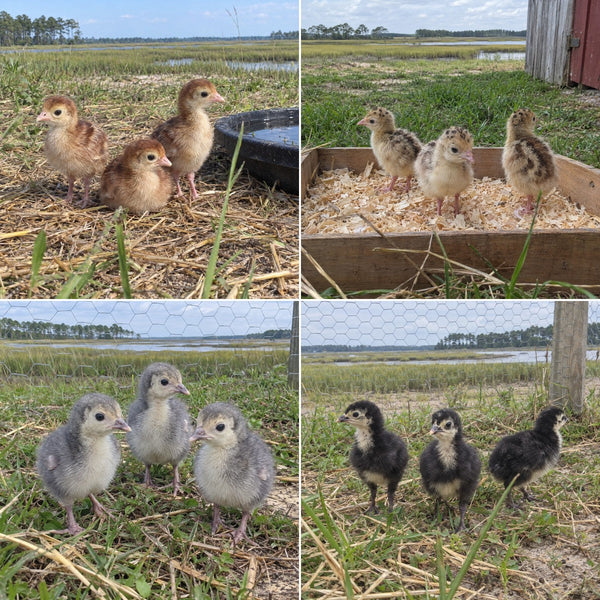
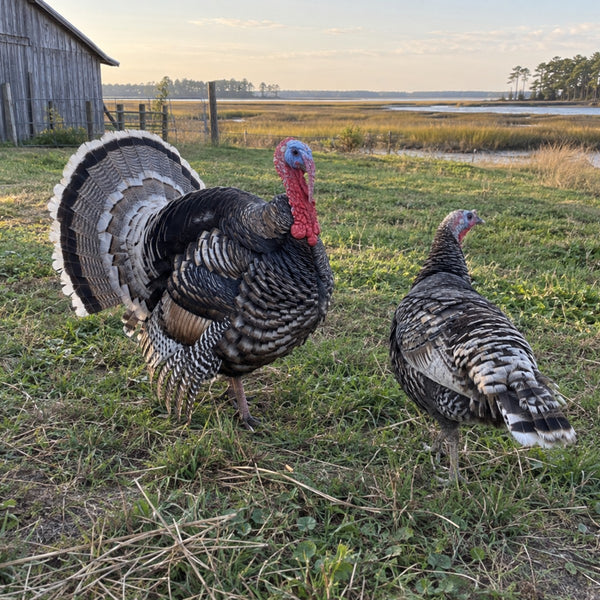
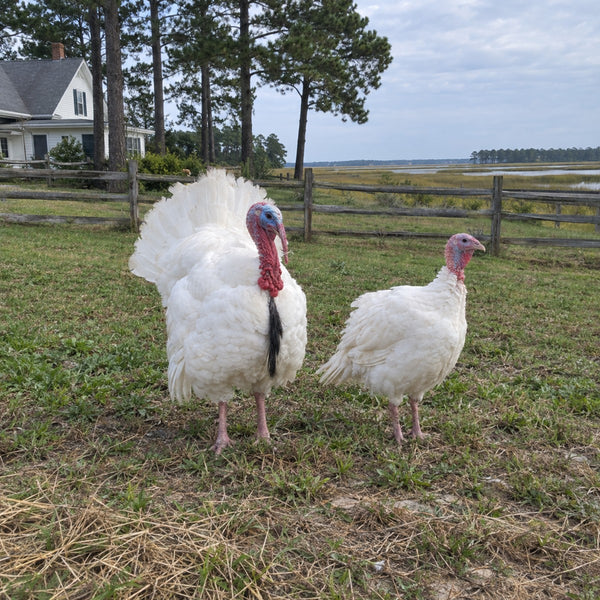
-
Black Spanish Turkey Poults
Minimum 4 poults
Regular price $26.99Regular price -
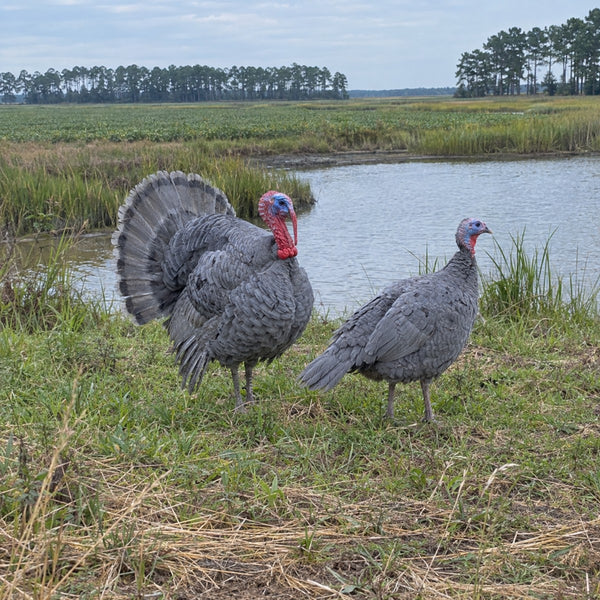
Blue Slate Turkey Poults
Minimum 4 poults
Regular price $26.99Regular price -
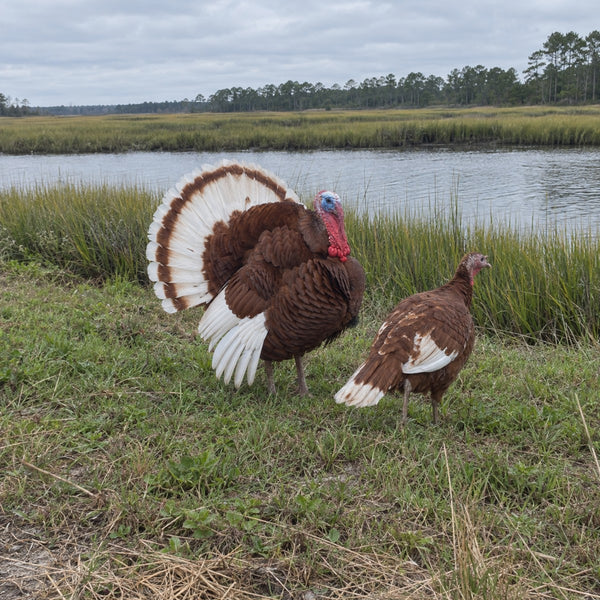
Bourbon Red Turkey Poults
Minimum 4 poults
Regular price $26.99Regular price -
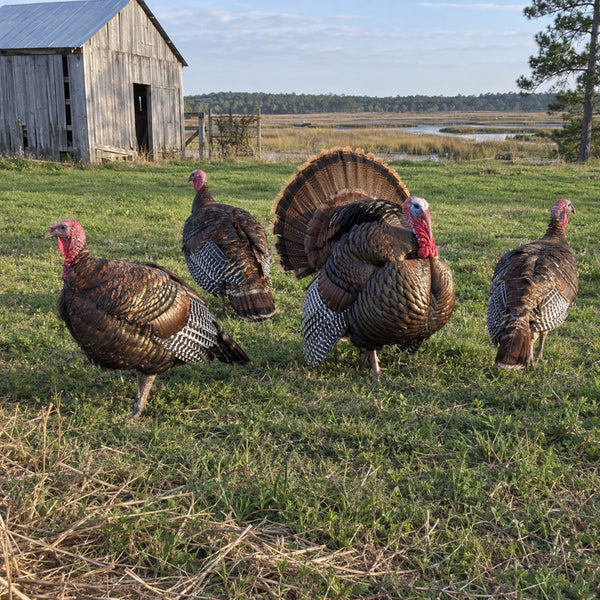
Broad Breasted Bronze Turkey Poults
Minimum 4 poults
Regular price $20.99Regular price -
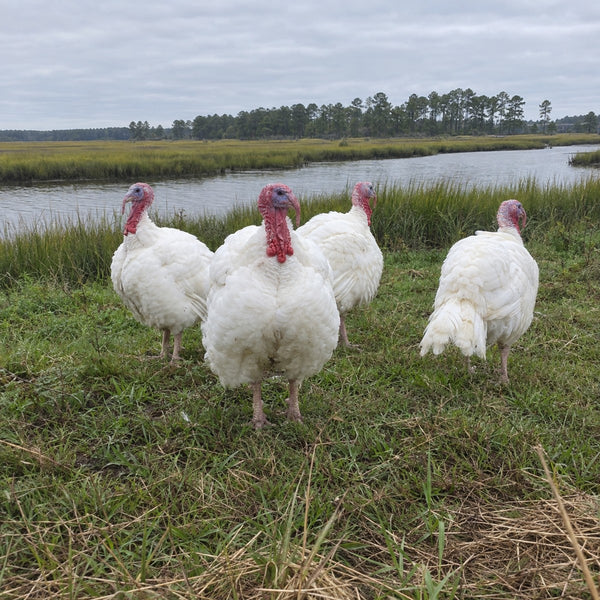
Broad Breasted White Turkey Poults
Minimum 4 poults
Regular price $17.99Regular price -
Heritage Turkey Poult Assortment (Priced Per Poult)
Minimum 4 poults
Regular price $23.99Regular price -
Heritage Turkey Poult Assortment 15-Pack
Free shipping
Regular price $329.85Regular price -
Narragansett Turkey Poults
Minimum 4 poults
Regular price $26.99Regular price -
White Holland Turkey Poults
Minimum 4 poults
Regular price $26.99Regular price


Order turkey poults online from Chesapeake Farm & Hatchery. Choose heritage breeds like Bourbon Red, Narragansett, Blue Slate, Black Spanish and White Holland, or fast-growing Broad Breasted White and Bronze for the table. Poults are shipped to your local post office for pickup with a 72-hour live arrival guarantee.
Heritage or Broad Breasted?
- Heritage turkeys (Bourbon Red, Narragansett, Blue Slate, Black Spanish, White Holland) grow more slowly, forage well, can fly and are a good fit for small farms and homesteads that want birds to keep year after year.
- Broad Breasted White and Bronze grow quickly and put on a lot of breast meat, which makes them the usual choice for a Thanksgiving table bird.
- Heritage Turkey Poult Assortment: a mix of heritage colors, sold per poult or as a 15 poult pack.
How ordering works
The minimum is 4 turkey poults, and you can add ducklings, goslings, keets or meat chicks to the same order. Poults ship from mid-February through late October, depending on breed. See Duckling & Gosling Shipping Info for shipping rates and seasons.
Poult care basics
Turkey poults need a warm brooder, a high-protein game bird or turkey starter feed, and shallow water. Dip a few beaks in the water and feed when they first arrive so they learn where to find them.
